Burst Pipe Water Extraction & Cleanup — What Actually Happens
A technical walkthrough of the water extraction phase: equipment, approach, surface-by-surface decisions, and how it transitions into drying.
Updated January 2026 · MH Water Rescue Minneapolis
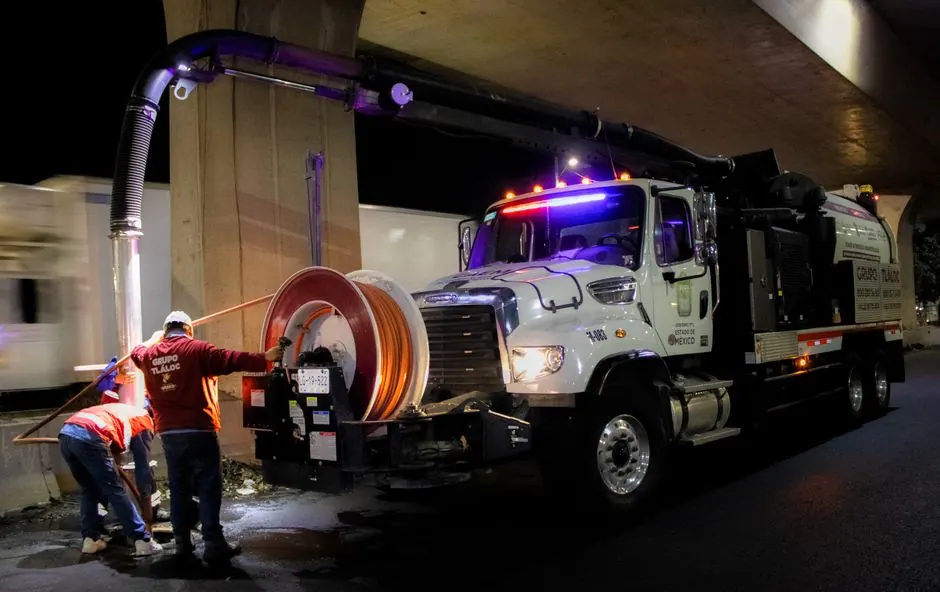
Extraction is the first phase and it determines most of what follows
Water damage restoration has a natural order. Water out, materials assessed, demolition where needed, drying setup, daily monitoring, completion. The speed and thoroughness of the first phase — extraction — has an outsized effect on everything downstream. Fast, complete extraction means less demolition, shorter drying, and more savable materials. Slow or incomplete extraction means the opposite.
The equipment
The core difference between professional water damage restoration and a homeowner with a wet-vac is equipment specification. A consumer wet-vac pulls about 1.5 inches of mercury at 50–80 CFM. A truck-mounted extractor we run pulls 14+ inches of mercury at 100+ CFM. That's roughly ten times the extraction power and the difference between pulling surface water and pulling water out of carpet backing, from under hardwood planks, and from the base of wall cavities.
For standing water over an inch, we use submersible pumps first — pumping to an exterior drain or a functioning floor drain is much faster than extracting with a wand. Pumps move water at rates measured in gallons per minute; truck-mount extractors are measured in gallons per hour. Right tool for each phase.
Surface-by-surface approach
Carpet
We extract face fiber first with weighted extraction wands connected to the truck-mount. Multiple passes, then a moisture check to see how much water is remaining in the pad. Most residential pad doesn't release water back into the wand usefully — it holds it until the pad is dry (days) or removed. For Cat 1 clean water losses within 24 hours we may dry pad in place with a floating-carpet technique; past 24 hours or for any Cat 2/3 water, pad comes out.
Hard flooring (tile, sealed concrete, vinyl)
Surface extraction is fast — the water is sitting on top. We check grout lines and perimeter joints for water that migrated below. On vinyl we check for water trapped under planks, which is common.
Hardwood
Specialized hardwood extraction mats connected to the truck-mount. These create a vacuum directly on the plank and pull water out through the wood. Done in the first 24–48 hours after a loss, this often reverses cupping before it becomes permanent.
Wall base
Water that wicked up a stud bay from the floor-level source is partially extractable. We drill small weep holes at the base of the drywall, let gravity work, and extract from there. Wall cavities with saturated batt insulation can't be fully extracted — the insulation is coming out regardless.
Basement standing water
Pump first — floor drains or exterior discharge. Then truck-mount extraction of residual water from the slab, any finished surfaces, and base of walls.
Transition to drying
Extraction completion is the gate to drying. We transition when the surface readings show no further water is being removed by extraction — which means remaining moisture is bound in materials and needs dehumidification to release. Air movers are placed, dehumidifiers are staged, containment is built if needed.
See water extraction and structural drying for the drying phase in detail.
Timeline
Single-room residential loss: 1–2 hours of extraction. Finished-basement loss: 3–6 hours. Multi-level migration: a full day. Commercial sprinkler event across multiple floors: often a full day with multiple crews.