Pipe Leak Water Damage Restoration in Minneapolis
Not every pipe failure is a dramatic burst. Pinhole leaks, slow joint failures, and hidden drips behind walls do quieter but often worse damage because the timeline is measured in weeks, not minutes. We find them, scope them, and restore what they damaged.
Signs you have a hidden pipe leak
Hidden leaks reveal themselves through secondary symptoms, not the leak itself. If you have any of these, there's a pipe leaking somewhere:
- A water bill that has crept up for several months without a change in usage
- A warm spot on a cold basement floor (slab leak)
- A faint musty smell in one room that keeps returning
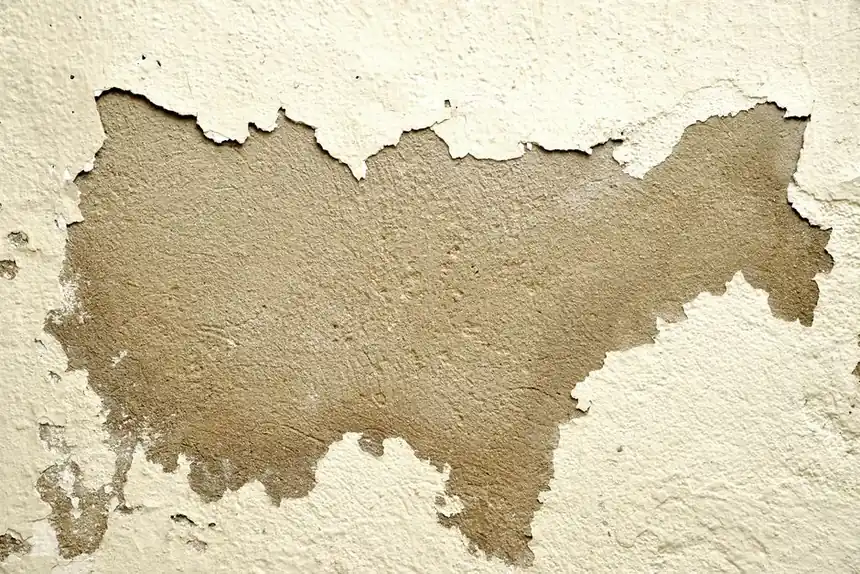
- Peeling or bubbling paint on a wall where no condensation source exists
- Soft drywall at the base of a wall or around a plumbing fixture
- A ceiling stain that slowly grows
- Warped hardwood in an area away from any obvious water source
- Mold spots at the back of a kitchen cabinet or vanity
- A faucet or appliance that drips on the exterior of a fitting instead of inside the drain
Why hidden leak damage is often worse than burst-pipe damage
A burst pipe is loud and gets attention — somebody shuts it off within hours. A pinhole leak at a copper joint behind a kitchen wall might release half a gallon a day, every day, for six months before anyone notices. That's 90 gallons into a single stud bay, with no evaporation path. The damage compounds: the drywall is beyond salvage, the studs may be rot-compromised, the insulation is permanently ruined, mold is established, and the subfloor underneath may have structural issues.
This is why insurance coverage on hidden-leak claims is harder. Most policies cover "sudden and accidental" discharge, not gradual leakage. Documentation becomes especially important — we document when discovery occurred, what evidence suggests the timeline, and the specific scope of resulting damage.
Our process for pipe leak losses
- Leak source identification. We work alongside a plumber to find the active leak. Our role is identifying the water trail — thermal imaging, moisture meters, and strategic inspection openings tell us how far water has traveled from the source.
- Full damage scope. Moisture mapping across the entire affected zone, including areas several feet from the visible symptom. Hidden leaks often have a larger damage footprint than people expect.
- Material assessment. We assess what's recoverable versus what's beyond salvage. Drywall with sustained saturation for weeks almost always comes out. Insulation comes out. Framing is evaluated for rot.
- Mold assessment. At weeks or months of saturation, mold is likely. If present and limited we handle it under IICRC S520 protocols; if widespread we may refer to a certified mold remediation contractor for the mold scope and handle the water-damage scope ourselves.
- Demolition and drying. Removal of unsalvageable materials, extraction of any trapped moisture, drying to dry-standard readings.
- Reconstruction planning. Insulation replacement, drywall, trim, flooring — either our crew or your contractor.
Common leak sources we see
- Pinhole leaks in copper supply lines — more common in neighborhoods with aggressive water chemistry
- Slow leaks at CPVC and PEX fittings, especially crimped PEX from certain early installations
- Angle stop (shut-off valve) weeping at the packing nut
- Toilet flange leaks — seal failure between toilet and drain
- Bathtub overflow gasket failures
- Shower pan leaks at membrane or drain
- Icemaker supply line pinholes
- Water heater pressure relief valve weeping
- Sink drain slip-fit and trap leaks
Related services
Hidden Moisture Inspection
Find leaks you can't see.
Wall & Drywall
In-wall damage.
Ceiling Damage
Upstairs leaks.
Slab Leak
Under-concrete leaks.
Broken Pipe Cleanup
Post-repair cleanup.
Reconstruction
Putting materials back.