Emergency Water Extraction in Minneapolis, MN
Standing water doesn't wait. Every hour it sits, it soaks further into subfloor, insulation, wall cavities, and contents. Our truck-mounted extraction rigs handle the volume residential wet-vacs can't, and we are typically on-site within the hour across Minneapolis and the inner suburbs.
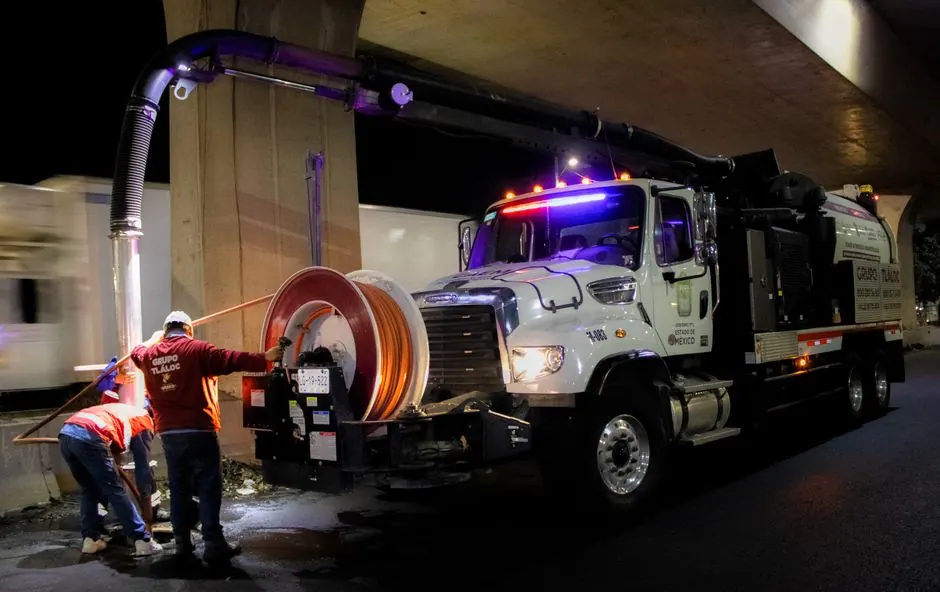
What emergency extraction actually involves
Extraction is the first phase of water damage restoration — the physical removal of liquid water from your structure before drying can begin. The speed and completeness of extraction determines almost everything downstream: how much material has to come out, how long drying takes, whether contents are savable, and ultimately what the loss costs.
Our equipment is not a souped-up shop-vac. The truck-mounted extraction rigs we run are commercial units that pull 100+ CFM of airflow and 14+ inches of mercury of lift — enough to extract water from under hardwood planks, through carpet pad into the subfloor, and from the base of wall cavities. For comparison, a consumer wet-vac has roughly a tenth of that capability and is easily overwhelmed by residential-scale flooding.
How we handle each surface
- Hard flooring (tile, vinyl, sealed concrete). Fastest and most straightforward. Weighted wand extraction removes surface water in a few passes. We then check the perimeter and under baseboard for wicking into adjacent walls.
- Hardwood. Hardwood looks dry on top long before it's dry underneath. We use specialized hardwood extraction mats connected to the truck mount to pull water out through the plank. Cupping often reverses if we catch it fast.
- Laminate flooring. Harder — water gets under the planks and the plank backing swells. Extraction can slow the damage but replacement is usually the eventual outcome. We extract anyway to limit the subfloor exposure.
- Carpet and pad. We extract the face fiber first with weighted wands, then make a decision on the pad. In most residential losses the pad comes out because it holds water and prevents subfloor drying. The carpet itself can often be lifted, extracted separately, pad replaced, and reinstalled.
- Standing water in basements. Over an inch of standing water calls for pumping first — submersible pumps or truck-mounted — then extraction of residual water from the slab and anything finished.
- Wall cavities. We drill small weep holes in the base of wet walls to let trapped water escape, then extract from there. Alternative is flood-cut demolition, depending on the extent.
Timeline and process
For a typical two-room residential loss, extraction takes one to three hours. A finished basement with several inches of water can take four to six. A multi-level loss with significant volume runs most of a day. We don't rush this — incomplete extraction forces more demolition later and extends drying by days.
After extraction, we immediately transition to the drying phase: air movers, dehumidifiers, and daily moisture monitoring. See our structural drying page for the details.
Water category — why it matters for extraction
The IICRC S500 standard classifies water into three categories by contamination level:
- Category 1 — clean water. From a supply line failure, water heater, appliance supply line, or roof leak into clean materials. Our standard extraction procedures apply.
- Category 2 — gray water. Dishwasher or washing machine discharge, aquarium water, toilet overflow of clean urine-only water. Still mostly a standard extraction but with additional PPE and some additional sanitization.
- Category 3 — black water. Sewer backup, flooding from an outside source, or Cat 1/2 water that has sat long enough to degrade. This is a specialized job with containment, PPE, and specific disposal protocols. For sewer backup we often refer to a specialized subcontractor.
A burst-pipe loss almost always starts as Category 1. But Category 1 degrades: within 24 hours it's Category 2; within 48–72 hours in warm conditions it's Category 3. Speed matters.
Common extraction call types in Minneapolis
- Finished basement flood from burst supply line, failed sump pump during spring thaw, or water heater failure.
- First-floor flood from washing machine hose, dishwasher supply line, or toilet supply line — typical overnight unattended losses.
- Multi-floor sprinkler discharge in condos and apartment buildings — the fire system released and water migrated several floors down.
- Attic leak migrating down from a frozen attic pipe through ceilings and down walls.
- Commercial office or retail loss over a weekend — discovered Monday morning with water everywhere.
What extraction doesn't cover
Extraction is just the water removal phase. It does not fix the pipe (plumber), replace damaged materials (demolition/reconstruction), or complete the drying (dehumidification and air movement). You almost always need the full restoration workflow — burst pipe water damage is the parent service page that walks through everything.
Related services & areas
Burst Pipe Water Damage
Full mitigation workflow.
Basement Burst Pipe
Flooded basement specialty.
Structural Drying
What happens after extraction.
Floor Water Damage
Flooring-specific extraction.
Broken Pipe Cleanup
Post-repair cleanup.
Commercial
Office and retail extraction.