Attic Frozen & Burst Pipe Water Damage Cleanup
A pipe splitting in a Minneapolis attic in January is one of the worst-case freeze failures. Water follows ceiling drywall, migrates down exterior walls, and reaches the floor below before anyone notices. By the time you see the ceiling stain, there's water in three rooms.
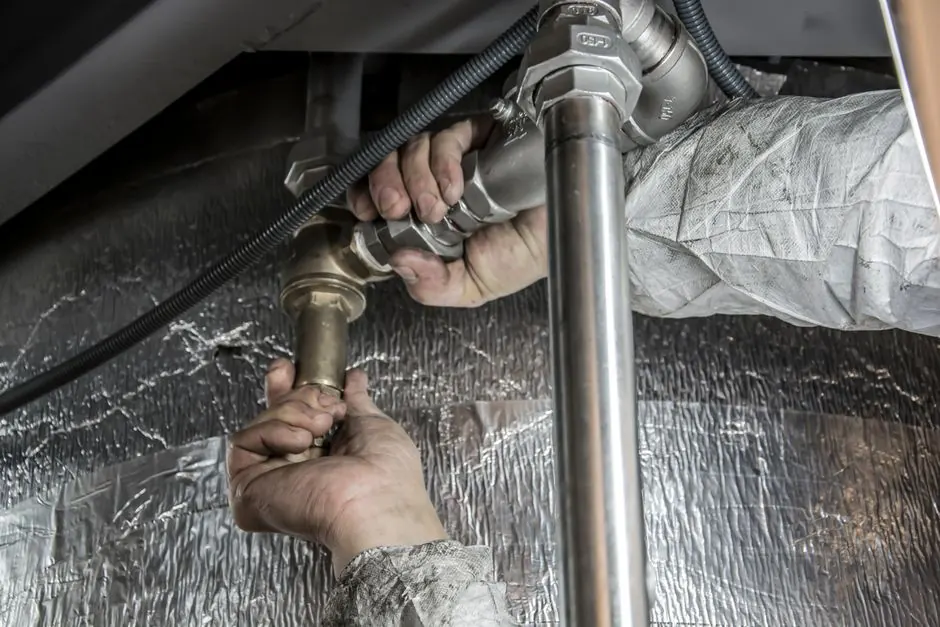
Why attics freeze pipes
Attics in Minneapolis are mostly unconditioned — insulated between the attic floor and the heated space below, with cold outdoor air circulating above. Any plumbing routed through the attic is essentially outside during our winter. Common reasons plumbing is in an attic: a second-floor bathroom that was added later, a kitchen that was expanded, a heating system vent that runs with adjacent plumbing, or an older home where the main vent stack and some supply runs go overhead.
When attic air temperature drops below 32°F — which it does routinely from December through March — any pipe up there with water in it is at risk. Insulation around the pipe helps but doesn't stop it; heat tape helps more; the only real fix is keeping plumbing out of unconditioned spaces, which is a major renovation.
What happens when an attic pipe splits
Water releases into the attic insulation first. Blown fiberglass or cellulose absorbs water heavily. Water then finds the path of least resistance — usually a ceiling fixture box (can light, exhaust fan, smoke detector), a drywall seam, or the top plate of an exterior wall. From there it drops into the room below or runs down the inside of the exterior wall.
Discovery is usually by ceiling stain first, then expanding sag, then failure. In worst cases a section of ceiling collapses. By the time the homeowner sees it, significant water has already entered the attic, the insulation, and the room(s) below.
Our attic pipe damage process
- Attic access and source identification in coordination with a plumber.
- Containment to prevent further water migration downward.
- Removal of saturated attic insulation — usually full removal in the affected area. Wet blown insulation is not practical to dry.
- Ceiling drywall removal where saturation exceeds dry standard or where sag is present.
- Drying of attic framing, truss members, and sheathing with air movement and dehumidification — attic drying is slow because of the air volume.
- Drying of the floor below — rooms where water came through the ceiling.
- Documentation and reconstruction.
Attic-specific challenges
- Access is difficult — attic hatches, pull-down ladders, limited lighting, low clearance
- Insulation is messy to remove and generates dust requiring HEPA filtration
- Ceilings often have insulation on top that must be cleared before drywall removal
- In winter, attic ambient temperature affects drying time significantly — we may need to establish containment and heat the drying zone
- Re-insulation after drying is a separate scope — we handle it, but it's not part of the mitigation phase
Related services
Frozen Pipe Damage
Parent winter specialty.
Ceiling Damage
Where attic leaks show.
Wall Damage
Downward migration.
Hidden Moisture
Finding attic water.
Structural Drying
Attic drying.
Reconstruction
Drywall and insulation.