Frozen & Burst Pipe Water Damage Repair in Minneapolis, MN
When a Minneapolis winter breaks a pipe open in your wall, your ceiling, or your basement, the water doesn't wait for business hours and neither do we. MH Water Rescue Minneapolis handles the water-damage side of the emergency — extraction, structural drying, materials assessment, moisture documentation, and insurance paperwork — from the first call through the final reading on the moisture meter.
*During normal demand. Severe cold snaps across the Twin Cities can extend arrival windows; we will give you an honest ETA on the call.
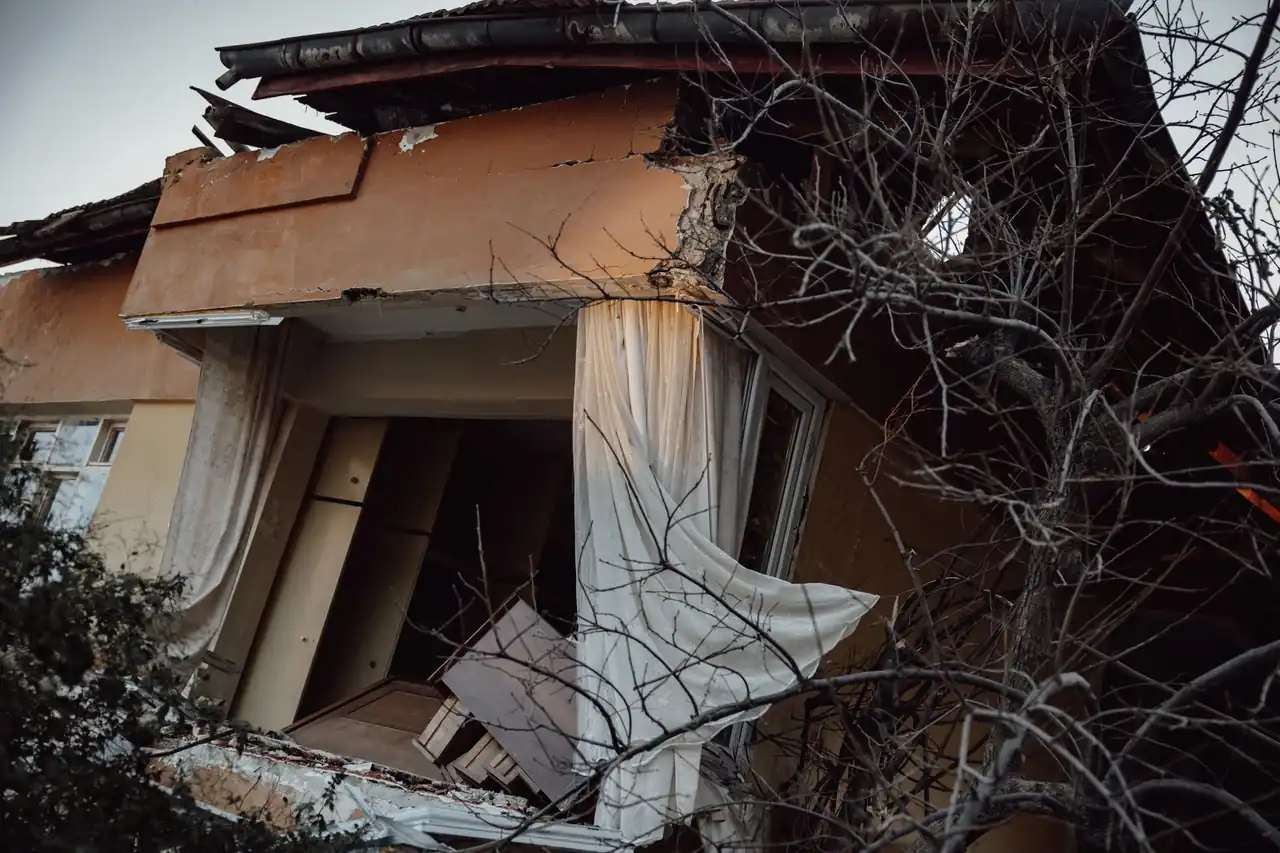
If a pipe just burst, do these three things before we arrive
Minutes matter when water is escaping inside the structure. The faster the water is stopped and the sooner moving water is interrupted, the less damage spreads into adjacent walls, cavities, insulation and the floor below. Here is the short version of what to do right now — then call us.
1. Shut the water off
Close the main shut-off valve for the whole house (usually in the basement near where the service line enters). If you cannot find or turn the main, close the valve nearest the leak — behind the toilet, under the sink, on the supply line to the water heater or the washing machine.
2. Cut power to wet areas
If water has reached outlets, light fixtures, panels, or the mechanical room, keep people away and shut the affected circuit off at the breaker. Do not step into standing water that could be in contact with live electrical equipment.
3. Document and call
Take photos and short videos of every affected room before you move anything — insurers rely on this later. Then call MH Water Rescue at (612) 493-1161. We will give you specific, room-by-room guidance for the wait.
A water-damage restoration company, not a plumbing company
This is an important distinction and one that costs Minneapolis homeowners real money when it isn't clear from the first phone call. A plumber stops the leak: they shut off, cut the failed section of copper or PEX or galvanized line, re-run or splice the pipe, and restore service. Many of them are excellent at it and we work alongside them every day. What a plumber usually doesn't do is extract the thousand gallons that already went through your walls, remove the drywall where water migrated vertically between studs, run air movers and LGR dehumidifiers for the three to five days it takes to dry a 2x4 and a joist bay to safe moisture content, document the entire loss for your adjuster, and put the structure back together afterward.
That's what we do. If your pipe has already been repaired and your home is still damp, swollen, or smelling musty — you need us, not another plumber. If the pipe is still leaking, call a plumber first (or ask us for a referral) and we will be on-site in parallel.
Our 23 specialized services
Each of the categories below links to a full service page with scope, process, materials affected, insurance notes, and the typical Minneapolis variation on that kind of loss.
Burst Pipe Water Damage
The core service: everything that happens after a supply line fails and water enters floors, walls, or ceilings.
Learn more →Frozen Pipe Water Damage
Winter-specific. Cold, thaw cycle, hidden rupture, and the drying plan that changes when the structure itself is frozen.
Learn more →Emergency Water Extraction
Truck-mounted and portable extraction for standing water, same-day. Carpet, pad, hardwood, concrete.
Learn more →Broken Pipe Cleanup
Post-repair cleanup: wet contents, affected finishes, odor control, surface sanitization and moisture mapping.
Learn more →Pipe Leak Restoration
Gradual and concealed leaks with cumulative damage behind cabinetry, inside wall cavities, or under flooring.
Learn more →Basement Burst-Pipe Damage
Finished basement flooding — carpet, drywall, mechanicals, contents — plus unfinished basements with slab-on-grade.
Learn more →Main Water-Line Damage
Service-line failures at the entry, meter area, or main — including coordination with Minneapolis Public Works.
Learn more →Slab Leak Water Damage
Damage above and around a failed pressure line under concrete — moisture in subfloor, flooring, and wall base.
Learn more →Floor Water Damage
Hardwood cupping, laminate lift, carpet and pad extraction, tile and grout, and subfloor assessment.
Learn more →Crawl-Space Pipe Damage
Saturated insulation, wet joists, standing water on vapor barriers, and the specific drying challenges of crawl spaces.
Learn more →Structural Drying
Air movers, LGR and desiccant dehumidifiers, drying chambers, moisture monitoring and documented completion.
Learn more →Water Heater Damage
Tank, tank-connector, and T&P valve failures — usually basements and utility rooms, often discovered late.
Learn more →Appliance Supply-Line Damage
Washing machine hoses, dishwasher lines, refrigerator ice-maker lines — small source, significant damage if slow.
Learn more →Ceiling Water Damage
Leaks from the floor above, bath supply lines, upstairs radiators — staining, sagging, risk of collapse.
Learn more →Wall & Drywall Damage
Wall cavities, batt insulation, trim, and the controlled removal decisions that keep rebuild costs down.
Learn more →Attic Pipe Damage
Frozen pipe splits in uninsulated attics — water tracks down walls and through ceilings fast.
Learn more →Toilet Supply-Line Damage
Braided hose or angle-stop failure. Clean water at first — sometimes thousands of gallons overnight.
Learn more →Fire Sprinkler Damage
Accidental discharge or frozen sprinkler line in commercial and multi-unit buildings. Multi-floor response.
Learn more →Boiler & Radiator Damage
Hydronic heat systems in older Minneapolis homes — treated water, pressurized lines, and glycol in newer systems.
Learn more →Commercial Burst Pipe
Offices, retail, warehouses, restaurants. Business-continuity drying with hours limited to after-hours.
Learn more →Apartment & Condo
Multi-unit water migration, HOA coordination, tenant displacement, and the paperwork multiple parties need.
Learn more →Reconstruction
Drywall, trim, paint, flooring, cabinetry back in — to match original or upgraded as the homeowner chooses.
Learn more →Hidden Moisture Inspection
Thermal imaging and pin/pinless moisture meters to find water that soaked somewhere you can't see.
Learn more →Why Minneapolis pipes fail differently than pipes anywhere else
If you grew up here you already know most of it: Minneapolis winters routinely drive overnight lows below zero for a week at a time, and the frost line in our ground sits around 60 to 90 inches in a cold year. Those two facts drive almost every burst-pipe call we take between December and March.
Our housing stock makes it worse. A huge share of Minneapolis homes were built before 1940. In Linden Hills, Longfellow, Powderhorn, Northeast, Audubon Park, and across the whole arc of streetcar-era neighborhoods, the plumbing was installed when exterior-wall insulation was an afterthought. A kitchen sink supply line running up through a 2x4 wall against the north side of a 1926 bungalow in Seward or Howe has about half an inch of lath, no batt insulation, and the wind-driven January cold on the other side. We see the same pipe freeze in the same wall in the same house every few years.
The private service line is the other common one. In Minneapolis, the water utility owns and is responsible for the main in the street and the curb-stop, and the homeowner is responsible for the service line that runs from the curb-stop into the basement. When frost drives deeper than normal — and in deep cold years it reaches below 7 feet in parts of the city — that shallower section of service line, especially in older homes, can freeze solid. Sometimes it thaws uneventfully and sometimes a split in the copper lets go the week after the cold snap breaks. We handle the water damage. The utility can help confirm a frozen main; a plumber handles the pipe repair; if the loss happened in a basement with a finished rec room, we have you covered on the other side of the wall.
Then there are specific property types. Apartment buildings along the river and in the Phillips communities have risers in exterior stud bays. Duplexes and triplexes in Standish and Powderhorn often share a single service entry, so when it fails both units lose water and both suffer damage. Minneapolis-area condos, especially in Downtown East, the North Loop, and parts of Uptown, have fire sprinkler lines in exterior soffits that have burst in cold snaps. If you own or manage any of these, we would strongly encourage keeping our number somewhere findable.
What happens between your phone call and a dry, documented home
Every job runs through the same six-phase sequence, whether it's a half-bathroom supply-line failure in a Kingfield bungalow or a sprinkler discharge across three floors of a Downtown East condo tower. The scale changes. The process doesn't.
Call and triage, within minutes
When you call (612) 493-1161 you will reach a technician, not a call center overseas. We ask you five or six specific questions — source, how long it's been running, whether it's shut off, which rooms, whether anyone's home, whether electrical is affected — and give you a real arrival window. If we can save your floor or your contents with a specific action in the next ten minutes, we tell you what to do before the truck arrives.
On-site inspection and moisture mapping
We photograph everything in its as-found condition — that documentation is what the adjuster relies on. We then map moisture with pin and pinless meters and with thermal imaging. The goal is to find every affected material, including the ones that look fine from the room side but are soaked inside the wall cavity. On a typical two-room loss we identify five to twelve affected materials; on a slab leak we may find damp subfloor and wall base fifteen feet from the actual leak path.
Water extraction
Standing water is pulled out with truck-mounted or portable extraction, depending on access and quantity. Carpet pad that's been soaked for more than a few hours in a residential loss usually comes out; carpet face fiber is extracted and may dry in place. Hard flooring is extracted on the surface and under, if we can get there. In basements we use submersible pumps for anything over an inch or two. This phase typically takes one to four hours.
Controlled demolition and containment
Wet drywall that cannot dry in place is removed in flood-cut sections — usually the bottom 16 or 24 inches, depending on how high water wicked up. Wet batt insulation comes out. Base trim is pulled and labeled for reuse where possible. We build poly containment if we need to isolate a drying chamber, especially in occupied homes. Decisions about what to save versus replace are made with the homeowner and with the adjuster in mind, following IICRC S500 guidance.
Structural drying with daily monitoring
Air movers establish laminar airflow across wet surfaces. LGR or desiccant dehumidifiers remove moisture from the air so wet materials can release theirs into it. We take moisture readings every 24 hours in the same locations and log them. Drying continues until framing moisture content and gypsum readings match the dry standard we established from unaffected areas of the same structure. Typical timeline is three to five days; frozen structures and heavy-material assemblies take longer.
Documentation, handover, and (if you want) reconstruction
You receive a complete drying log, before-and-after photographs, the scope of work, moisture readings at every reading point, equipment hours, and a materials inventory. Your adjuster gets the same packet. From there you decide: have us do the reconstruction — drywall, paint, trim, flooring — or hand the documentation to your own contractor. Either way the mitigation side is done, dried, and signed off.
What our customers say
A small selection from calls we've handled. First names only out of respect for the people who've been through a water emergency in their home.






First names only. Reviews shown with permission from the customers involved.
What a burst-pipe water damage claim actually costs in Minneapolis
This is the question people ask on the phone, and the honest answer is: it depends entirely on how much water, how long, and what it hit. Not a number we can quote without being in your house. But we can give you the framework insurers and restoration professionals use, so you can talk to your adjuster from an informed position.
A burst-pipe loss has two cost sides: mitigation (the emergency response, extraction, and drying) and reconstruction (putting the drywall, trim, paint, and flooring back). Published industry data from the Twin Cities area suggests median mitigation runs in the $3,500–$4,500 range for a residential loss, with the tails on either side being large. Reconstruction varies more because finishes, cabinetry, and flooring type dominate the number. A simple rip-and-replace of 80 linear feet of baseboard and 32 square feet of drywall in a utility space might come in under $1,500; the same square footage in a kitchen with custom cabinets and hardwood underfoot could reach five figures.
Minnesota homeowners insurance generally covers sudden and accidental water losses. A frozen pipe that bursts on January 14th is the textbook example of a covered event. Gradual leakage that has been running for months and has caused mold is the textbook example of a not-covered event. In between there's a lot of adjuster discretion, which is why documentation from a restoration professional matters. If your pipe failed because the home was unheated during an away period — a common winter exclusion in Minnesota policies — read your policy carefully; we have seen claims denied over this specifically.
For the full breakdown including line-item cost categories, deductible considerations, and how to challenge a low initial estimate, read our Minneapolis cost guide and our insurance coverage guide.
Where we work
MH Water Rescue covers all 83 Minneapolis neighborhoods, every Hennepin County municipality from Bloomington to Brooklyn Park, and Anoka County cities from Columbia Heights north through Blaine and Coon Rapids. For the first response — same-day water extraction and the first drying setup — we routinely cover the whole seven-county Twin Cities metro. Follow-up drying monitoring for far-edge Scott, Carver, and Washington County locations we handle case by case; call and we'll be honest about whether we're the right fit.
Minneapolis
All 83 residential neighborhoods across 11 communities, plus Downtown, Uptown, University, and Phillips.
Hennepin County suburbs
Bloomington, Edina, Richfield, St. Louis Park, Golden Valley, Plymouth, Brooklyn Park, Brooklyn Center, Crystal, New Hope, Robbinsdale, and beyond.
Anoka County
Columbia Heights, Hilltop, Fridley, Spring Lake Park, Coon Rapids, Blaine, and the northern-metro corridor.
Questions we get asked almost every time
Do I need a plumber or a water damage restoration company?
Usually both, in that order. A plumber stops and repairs the failed pipe. A water damage restoration company — us — removes the water, dries the structure, assesses and documents damaged materials, and handles the insurance paperwork on the mitigation side. If water has gotten into walls, floors, ceilings, or insulation, you need both. If a small leak was contained to a nonporous surface and wiped up quickly, you may only need the plumber.
How fast can you actually get here in a Minneapolis winter?
In normal conditions we hit a 60-minute window across Minneapolis proper and inner-ring suburbs. During a widespread cold snap when every restoration company in the metro is slammed — the deep-cold February weeks are the usual culprits — honest arrival windows stretch to several hours. We will tell you the real number on the call and we will stay on the phone with you about what to do in the meantime.
Will my homeowners insurance cover this?
If it was a sudden and accidental pipe failure — the pipe froze, cracked, and let go — it is almost always covered under a standard Minnesota homeowners policy. The damage caused by the water is covered. The pipe itself is often covered too, within sublimits. Gradual leakage that has been running undetected is a different story. If the home was unheated during a vacancy, your policy may exclude the loss. We do not sell insurance and we are not adjusters, but we've worked alongside enough of them to help you understand your specific policy language. See our insurance guide.
Can a frozen pipe burst when it thaws instead of when it's frozen?
Yes — and this is the one that surprises homeowners the most. Ice expansion is what cracks the pipe; the crack is often above the frozen plug of ice, so no water escapes until the plug melts and pressure returns. People think they got lucky because nothing leaked during the cold snap, and then on the first warm day they come home to water in the basement. If a pipe froze in your house, assume it may fail during the thaw and check it.
How long does the drying actually take?
Three to five days is typical for a straightforward residential loss. A heavy-material assembly — plaster-and-lath walls in a 1920s home, heavy hardwood over subfloor, basements with lots of concrete — can take seven to ten days. The number isn't negotiable on our side: we dry until moisture readings match the dry standard of unaffected parts of your home. Pulling equipment earlier because it's inconvenient almost always leads to a secondary mold claim within six months.
You're not actually in Minneapolis — your address is Apple Valley?
Correct — our main dispatch and shop is in Apple Valley, which is about 20 minutes from most of South Minneapolis. We cover Minneapolis itself and the near-ring suburbs daily. We don't claim a false storefront in Minneapolis the way some competitors do, because the City of Minneapolis and Google both penalize that, and because it's dishonest. What matters is arrival time, and we have that covered.
What if the restoration company tells me more needs to come out than I expected?
Ask them to show you the moisture readings. Materials have published drying thresholds; drywall with sustained moisture readings above a certain level is coming out whether it looks wet to the eye or not. If someone can't show you readings to justify removal, get a second opinion. We will walk you through our readings, our IICRC S500 references, and the exact square footage we're recommending for removal, and we are happy to pause while you get another set of eyes on it.